Introduction
Choosing the right orthodontic treatment can feel confusing. With options like braces, aligners, and veneers, it is important to know what fits your needs. In this guide, we will explain how to choose the right orthodontic treatment. We will compare braces, aligners, and veneers. You will also learn about the best orthodontic treatment for adults and teens. By the end, you will feel more confident about your decision.
What Are Orthodontic Treatments?
Orthodontic treatments help straighten teeth and improve your smile. They can fix crowded, crooked, or spaced teeth. Many people choose orthodontic options for adults and teens to boost confidence and oral health. Some treatments move teeth, while others cover them for a better look. For example, braces and aligners shift teeth over time. Veneers, on the other hand, cover the front of teeth to improve their appearance. Each option works differently, so it is important to understand them.
Braces: Overview, Pros, and Cons
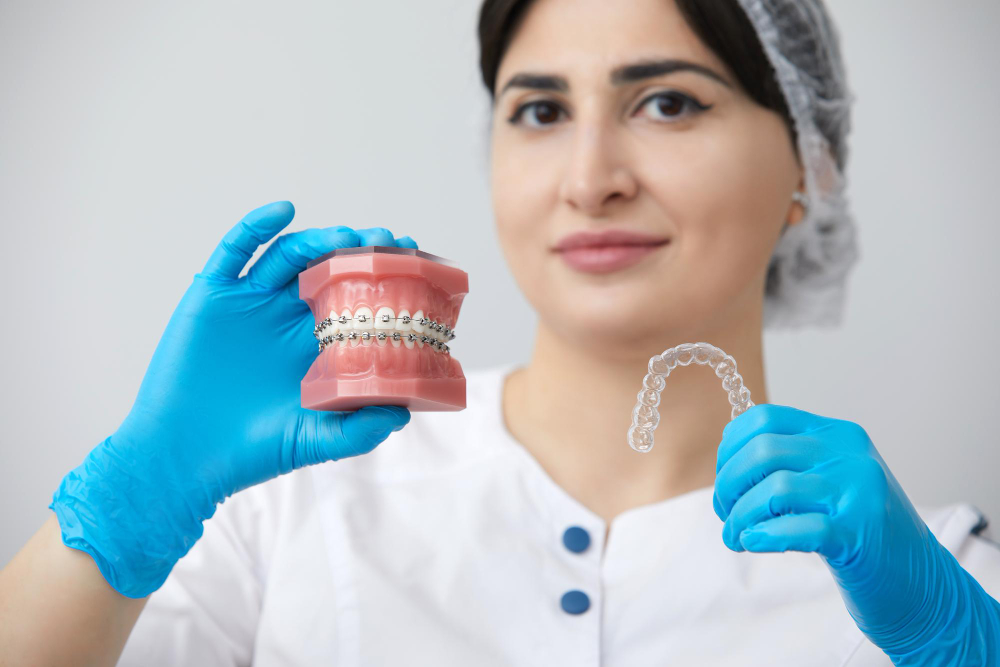
Braces are metal or ceramic brackets attached to your teeth. Wires connect the brackets and gently move teeth into place. Braces are a common choice for both teens and adults.
Still, braces remain a trusted option for many patients.
Aligners: Overview, Pros, and Cons
Aligners are clear, removable trays that fit over your teeth. You wear them for most of the day and change them every few weeks. Aligners are popular among adults and teens who want a less noticeable treatment.
However, aligners offer a flexible and discreet way to straighten teeth.
Veneers: Overview, Pros, and Cons
Veneers are thin shells made of porcelain or resin. Dentists place them on the front of your teeth to improve their look. Veneers do not move teeth but can hide chips, stains, or small gaps.
Even so, veneers are a fast way to improve your smile’s appearance.
Factors to Consider When Choosing Orthodontic Treatment
When deciding on the best orthodontic treatment, think about these factors:
Therefore, talk to a certified orthodontist. They can help you choose the right option for your smile.
Cost Comparison: Braces vs. Aligners vs. Veneers
Cost is an important part of your decision. Here is a simple comparison:
Insurance may cover part of the cost for braces or aligners, but not usually for veneers. Always check with your provider first.
Frequently Asked Questions
If you have more questions, your orthodontist can help.
Prevention and Oral Care Tips During Treatment
Good oral care is important during any orthodontic treatment. Here are some tips:
With proper care, you can keep your smile healthy during treatment.
Conclusion
In summary, choosing the right orthodontic treatment depends on your needs, budget, and lifestyle. Braces, aligners, and veneers each have their own pros and cons. For the best results, consult a certified orthodontist like Dr. Jagadish to find the best treatment for your smile.